What Is a Digital Marketing Course? A Complete Beginner’s Guide
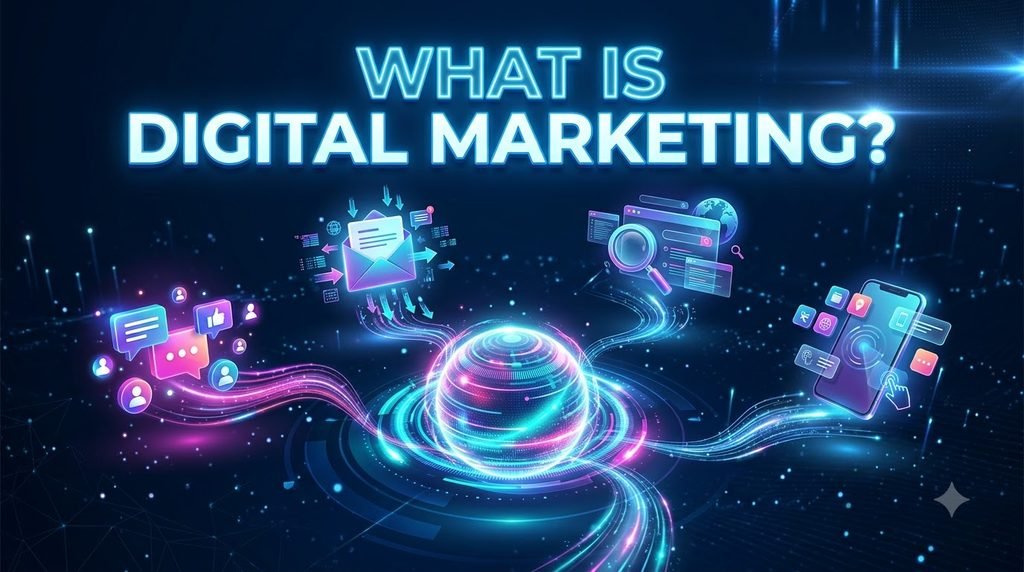
Have you ever wondered how a brand appears at the top of Google, why certain Instagram advertisements catch your attention, or how YouTube creators promote products to thousands of people? Behind these activities is a strategy called digital marketing. If you are a student, fresher, college graduate, or someone exploring a new career, you may have searched online for what is a digital marketing course and whether it is worth learning. The good news is that you do not need to be a coding expert or have years of work experience to begin understanding this field. A digital marketing course teaches you how businesses promote their products and services through digital channels such as search engines, social media, websites, email, and online advertising platforms. It helps you understand how to reach the right audience, create useful content, attract visitors, and measure marketing performance. In this guide, we will explain digital marketing in simple language, explore what you learn in a course, discuss career opportunities, and help you understand how to choose a learning programme that matches your goals. What Is a Digital Marketing Course? A digital marketing course is a structured training programme that teaches you how to promote brands, products, services, and businesses online. Instead of relying only on traditional marketing methods such as newspapers, billboards, and printed advertisements, digital marketing uses online platforms to reach audiences where they spend time. For example, imagine you own a small clothing brand. You want people to discover your products, visit your website, and place orders. A digital marketer might help you: A digital marketing course introduces you to these activities and teaches you how to plan, implement, and evaluate marketing campaigns. The objective is not simply to learn how to use social media. It is to understand how digital channels work together to achieve a business goal. What Is the Main Purpose of a Digital Marketing Course? The main purpose is to help learners develop knowledge and practical skills for promoting businesses online. Depending on the course, you may learn how to research keywords, optimise websites, create marketing content, manage social media accounts, set up advertising campaigns, and analyse campaign results. A beginner-level course introduces the fundamentals, while an advanced programme may cover more specialised subjects such as performance marketing, technical SEO, marketing analytics, and automation. The right course should help you understand not only which tools to use, but also why and when to use them. What Is Digital Marketing, and How Does It Work? Digital marketing is the use of online channels and technologies to promote a brand, communicate with an audience, and support business objectives. Let’s understand it with a simple example. Imagine you search Google for “best sneakers for college students.” You click a website, compare different products, see an advertisement on Instagram later, and eventually purchase a pair of sneakers. Several digital marketing activities may have influenced your journey. This is how digital marketing can connect awareness, research, and purchasing decisions. Businesses use different combinations of these channels depending on their goals, budgets, and target audiences. What Do You Learn in a Digital Marketing Course? One of the most common questions beginners ask is: “What will I actually learn if I join a digital marketing course?” The answer depends on the institute and programme, but a comprehensive course usually introduces several core areas. 1. Search Engine Optimisation (SEO) SEO is the process of improving a website’s visibility in unpaid search engine results. For example, if someone searches for “best digital marketing course in Mumbai,” an institute would want its relevant course page to be discoverable for that search. SEO training may cover: Students learn how to identify what people are searching for and how to make website content more useful and discoverable. SEO is a long-term process. No course or marketer can guarantee that a website will achieve a specific Google ranking. 2. Social Media Marketing Social media marketing involves using platforms such as Instagram, Facebook, LinkedIn, and other relevant networks to communicate with audiences and promote businesses. A course may teach you how to: For instance, a café could use Instagram to showcase its menu, share customer experiences, announce offers, and encourage people to visit. Social media marketing is especially interesting for learners who enjoy creativity, communication, content planning, and understanding audience behaviour. 3. Search Engine Marketing and Google Ads Search engine marketing can include paid advertising on search engines. Google Ads is one of the major platforms used for this purpose. Unlike SEO, which focuses on unpaid search visibility, Google Ads allows eligible advertisers to pay for advertising placements. In a digital marketing course, you may learn about: Imagine a coaching institute wants more student enquiries before admissions close. A marketer might create a Google Ads campaign targeting relevant searches and direct users to a page with course details and an enquiry form. The campaign’s performance should be evaluated using meaningful outcomes, such as qualified enquiries, rather than clicks alone. 4. Content Marketing and Blogging Content marketing involves creating useful information that attracts, educates, and engages a target audience. This content can include blog articles, social media posts, videos, infographics, email newsletters, and website guides. During training, you may learn how to research topics, understand search intent, structure articles, write clear headings, and create content that answers users’ questions. For example, a blog titled “What Is a Digital Marketing Course?” can help students understand the subject before deciding whether to enrol in a programme. Good content should prioritise the reader’s needs. Adding keywords naturally can support SEO, but repeating the same phrase unnecessarily can make an article difficult to read. 5. Website Creation and WordPress A website is often the central destination for digital marketing campaigns. Website training introduces learners to how websites are structured, how pages are created, and how users navigate from one section to another. Depending on the course, you may learn how to: You do not necessarily need advanced coding knowledge to start building a basic WordPress website. However,
What Is a Digital Marketing Course? A Complete Beginner’s Guide Read More »