
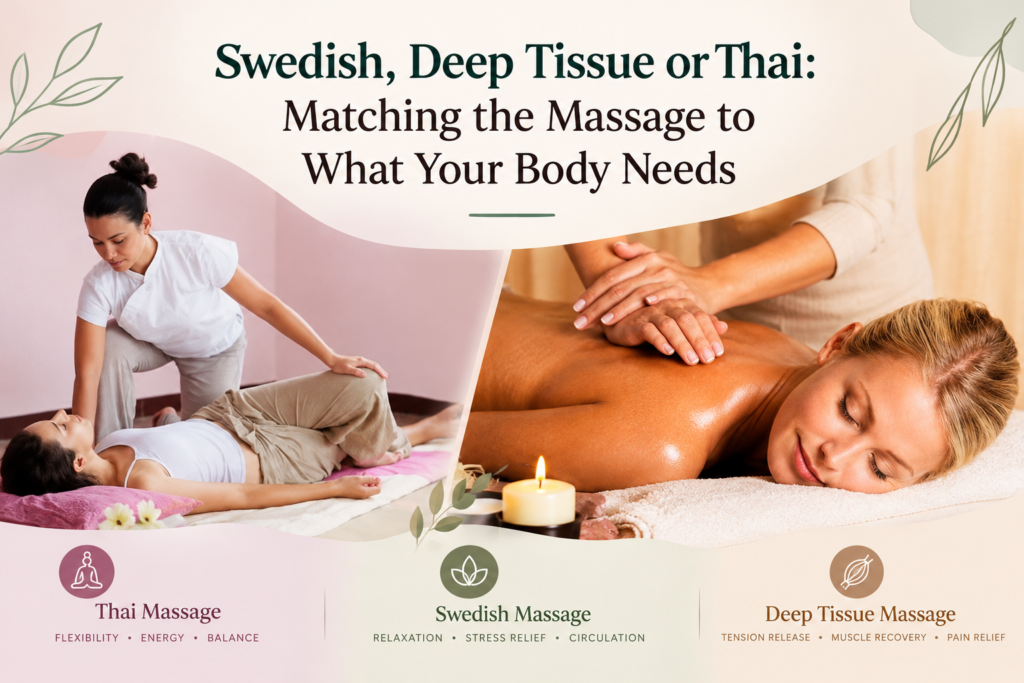
Stand in front of almost any spa menu and the choices can feel like a foreign language. Swedish, deep tissue, Thai, Balinese, aromatherapy, trigger point, hot stone: each sounds appealing, and none comes with clear instructions. Most guests end up picking whichever name sounds familiar, and some leave wondering why the session felt too light, too firm or simply not what they needed.
The good news is that choosing a massage does not have to be a guessing game. Once you understand what each style does and how it feels, the decision becomes much easier. This guide explains the main styles in plain language, shows you how to match them to your day and your body, and covers how to talk to a therapist, what to expect during a session and what to do afterwards. It is written with busy Mumbai professionals in mind, especially anyone searching for a body massage in Bandra, but the advice applies wherever you book.
Why the right style matters
A massage is not one single thing. The same hour on the table can feel very different depending on the technique, the pressure and the pace. A flowing, gentle session can leave you feeling sleepy and calm. A firm, targeted session can leave you feeling looser in the shoulders but a little tender the next day. A stretching session can feel energising. None of these is better than the others. They simply do different jobs.
When the style does not match your needs, the experience can disappoint. Someone who wanted to switch off after a hectic week may feel uncomfortable during a deep tissue session. Someone with tight shoulders from desk work may find a light, relaxing massage pleasant but not quite enough. Matching the style to your goal is the simplest way to get more from your time and money.
It also helps to remember that massage may help relieve muscle tension and support relaxation, but it is not a medical treatment. A reputable spa will never promise to cure an illness or guarantee a result. If you have a health condition, an injury or are pregnant, talk to your doctor first.
Start with the pressure scale
Before looking at individual styles, think about pressure, because it affects almost everything else.
Light pressure is gentle and soothing, usually with flowing strokes. It suits first-timers, sensitive guests and anyone who mainly wants to relax.
Medium pressure is firmer without being intense. Many people find this the sweet spot for general muscle tension.
Firm pressure uses slower, deeper work on tight areas. It can produce a satisfying sense of release, but it should never be painful.
A useful rule is that a massage should feel like good discomfort at most, never sharp or burning pain. If you tense up, hold your breath or grit your teeth, the pressure is too much. A good therapist will check in, but you should also speak up.
Swedish massage: the relaxing classic
Swedish massage is probably the most widely known style. The therapist uses long, gliding strokes, kneading and gentle circular movements, usually with oil, to warm the muscles and encourage a calm, unhurried feeling.
Best for: first-time guests, stress and general tiredness, people who want to switch off, and anyone unsure what to choose.
What it feels like: smooth, rhythmic and soothing. Pressure is usually light to medium, though many therapists can adjust it.
Good to know: if you are new to massage, Swedish is a safe starting point. You can always ask for firmer pressure in the areas that need it.
Deep tissue massage: for stubborn tension
Deep tissue massage uses slower strokes and firmer pressure to work on the deeper layers of muscle. It is commonly chosen by people who feel tightness in the neck, shoulders, upper back or lower back, which is common among people who sit at desks or use laptops for much of the day.
Best for: desk-related tension, tight shoulders, a stiff back, and people who find light massage not quite enough.
What it feels like: focused and firm. You may feel a stretching or pressing sensation on tight spots. Some people feel mildly sore the day after, which is usually short-lived, but sharp pain is not normal and you should tell the therapist straight away.
Good to know: deep tissue does not mean the therapist should lean in as hard as possible. Slow, steady pressure that you can breathe through is the goal. If you have an injury, recent surgery, a bleeding disorder or take certain medications, check with your doctor first.
Thai massage: stretching and rhythm
Thai massage works differently from oil-based styles. The therapist uses hands, thumbs, forearms and sometimes feet to apply pressure along the body, and moves you through assisted stretches. It is often done on a mat or low bed, and guests are commonly given loose, comfortable clothing rather than being draped and oiled, though this varies between spas.
Best for: guests who like to feel stretched, people who sit for long hours and want to loosen up their hips and legs, and anyone who prefers a more active session over a purely relaxing one.
What it feels like: rhythmic pressing and stretching, with the therapist guiding your limbs into positions. It can feel energising rather than sleepy.
Good to know: if you are very stiff or have joint problems, tell the therapist so the stretches stay within a comfortable range. Never force a stretch.
Balinese massage: the middle ground
Balinese massage blends long strokes, gentle stretches, acupressure-style pressing and sometimes aromatic oils. It sits between Swedish and deep tissue in feel, which makes it popular with guests who want a session that is relaxing but still has some substance.
Best for: guests who like a varied, flowing session and are comfortable with medium pressure.
What it feels like: a combination of smooth strokes and firmer pressing, often accompanied by a pleasant scent.
Aromatherapy massage: scent and calm
Aromatherapy massage pairs gentle massage techniques with essential oils chosen for their fragrance. The idea is that scent can add to the sense of calm, and many guests simply enjoy the atmosphere it creates.
Best for: guests who respond strongly to scent and ambience, and anyone who wants a soothing, sensory session.
Good to know: tell the therapist if you have allergies, sensitive skin, asthma or are pregnant, so the oils can be chosen carefully. Some essential oils are not suitable for everyone.
Indian champi: head, neck and shoulders
Champi is a traditional Indian head massage, usually including the scalp, neck and shoulders. Many Indians grew up with some version of it at home, and it remains a favourite for good reason: it targets the places where many people hold tension.
Best for: mental tiredness, long screen days, headaches linked to tension, and people who want something shorter than a full-body session.
Good to know: it can be booked on its own or added to a longer treatment. If you have a scalp condition or sensitive skin, mention it beforehand.
Reflexology: the feet take centre stage
Reflexology focuses on the feet and applies pressure to specific points. Many people book it after long days of walking, and it can be a comforting option if you are not comfortable with a full-body massage.
Best for: tired feet and legs, guests who prefer a clothed treatment, and those who want a gentler introduction to bodywork.
Hot stone and herbal compress: warmth that soothes
In hot stone massage, warm stones are placed on or glided across the body. Herbal compress treatments use warm, herb-filled pouches pressed gently on muscles. Both use heat to help muscles relax.
Best for: guests who feel cold or tense and enjoy warmth, particularly in cooler weather.
Good to know: heat is not suitable for everyone. If you are pregnant, have heart or circulation concerns, diabetes, reduced sensation in your skin or any condition affecting how you respond to heat, check with your doctor first.
Trigger point massage: precision work
Trigger point massage targets particular tight spots, sometimes called knots, with focused pressure. It tends to be chosen by people with specific, recurring areas of tension.
Best for: a particular tight spot, such as a shoulder blade or lower back, that keeps coming back.
Good to know: it can feel intense. Say so if the pressure is too much, and expect to be asked about where it hurts and how long you have had it.
A quick way to choose
If you want a fast answer, use this as a starting point.
- I just want to relax: Swedish or aromatherapy.
- My shoulders and back are tight from desk work: deep tissue, or Swedish with firmer pressure on the problem areas.
- I like stretching and feel stiff: Thai massage.
- I want something in between: Balinese.
- My head feels heavy after screen time: Indian champi.
- My feet and legs are exhausted: reflexology.
- I feel cold and tense: hot stone or herbal compress, if suitable for you.
- I have one stubborn spot: trigger point work.
- I honestly do not know: start with Swedish and ask the therapist for advice.
Choosing for a busy Bandra day
Bandra life has its own rhythms. Many people work around Bandra Kurla Complex, spend evenings on Linking Road or Hill Road, or unwind near Carter Road and Bandstand. A few examples show how this affects the choice.
After a long day in front of a laptop in BKC: deep tissue or a mix of Swedish and trigger point work can help ease shoulders and upper back. Book an evening slot so you can go home and rest.
A weekend treat after running errands: Swedish, Balinese or aromatherapy for a gentle reset. Weekend slots fill up, so book ahead.
Before a long trip: a lighter session is usually better. Heavy work right before travel can leave you tender.
After a long trip: reflexology or a gentle full-body session can feel restorative.
A couple’s outing: many spas offer shared rooms for couples. Choose a style you will both enjoy, and consider something relaxed such as Swedish or aromatherapy so neither of you feels pushed.
How to talk to your therapist
The best sessions are collaborative. A few simple habits make a big difference.
- Be specific at the start. Say where you hold tension, what you want from the session and whether you have any injuries.
- Mention allergies and health issues. This includes oils, scents, skin conditions, pregnancy, blood pressure, recent surgery and medications.
- Give feedback during the session. Say lighter, firmer, warmer or cooler as needed. Good therapists welcome it.
- Do not be shy about boundaries. You decide what areas are worked on and how you are draped. A professional therapist will always respect this.
What to expect during a session
If you have never had a massage, the structure is simple. You will be greeted, asked a few questions, shown to a private room and given time to undress to your comfort level and settle under a towel or sheet. The therapist uncovers only the area being worked on. The session ends with a few quiet moments, then time to dress and, often, a glass of water.
The room is usually softly lit and quiet. It is fine to talk or stay silent, whichever you prefer. Many people drift into a light doze, which is perfectly normal.
How to prepare
- Arrive ten to fifteen minutes early so you are not rushed.
- Eat lightly an hour or two before. A heavy meal makes lying down uncomfortable.
- Shower if you can, particularly after a workout or a long day in the heat.
- Keep jewellery and valuables to a minimum.
- Drink water beforehand, and plan to drink more afterwards.
Looking after yourself afterwards
The hours after a massage are a good time to be kind to yourself. Drink water, avoid heavy meals and alcohol straight after, and give yourself some quiet time if you can. Some people feel relaxed and slightly drowsy, so be careful with driving. After deep tissue or trigger point work, mild tenderness for a day is common. If you feel sharp pain, dizziness, swelling, or any symptom that concerns you, contact a doctor.
How often should you book?
There is no single right answer. Some people book once a month for general wellbeing, others once every few weeks during a stressful period, and others only for special occasions. If you are dealing with a specific issue such as ongoing back pain, ask your doctor or a qualified professional for advice rather than relying on massage alone.
Common mistakes to avoid
- Choosing by price alone. A cheap session with a rushed therapist is rarely a bargain.
- Staying quiet when the pressure is wrong. You are paying for your comfort. Speak up.
- Booking too much too soon. Try a single session before buying a package.
- Hiding health information. Therapists can only keep you safe if they know your situation.
- Expecting miracles. Massage may help you relax and ease tension, but it is not a cure.
Choosing a spa in Bandra
Once you know the style you want, the next question is where. Look for a spa that offers a short consultation, private rooms, clean linen, a clear menu and a final price that includes taxes. Read a few recent reviews and notice patterns. Be cautious about spas that push large packages or make dramatic health claims.
One option to consider is Moksham, a fusion spa running in Mumbai since 2010 that brings together Indian and global massage traditions. Its Bandra branch is on the first floor of Hill View Building on Hill Road, opposite Tanishq, and its services include Swedish, deep tissue, Thai, Balinese, Indian champi, aromatherapy and trigger point massage, among others. You can see the full menu and contact details at Moksham Spa Bandra. As with any spa, confirm availability and pricing, and compare it against your own checklist.
Frequently asked questions
What is the difference between Swedish and deep tissue massage? Swedish uses lighter, flowing strokes for relaxation. Deep tissue uses slower, firmer pressure to work on areas of tension. Many guests start with Swedish and move to deep tissue if they want more intensity.
Which massage is best for back pain? It depends on the cause. For muscle tension from desk work, deep tissue or Swedish with focused pressure are common choices. For persistent or severe back pain, see a doctor first, since massage is not a substitute for medical care.
Is Thai massage painful? It should not be. Thai massage involves firm pressing and stretching, but you should be able to breathe comfortably through it. Tell the therapist if a stretch is too much.
Do I have to be undressed? It depends on the treatment. Oil-based massages are usually done with you undressed to your comfort level and draped with a towel. Thai massage is often done in loose clothing. You will be told what to expect when you book.
Can I choose the pressure? Yes. A good therapist will ask at the start and check in during the session.
What if I fall asleep? That is perfectly normal and many people do. The therapist will carry on or wake you gently at the end.
Is massage suitable during pregnancy? It can be, with the right precautions. Speak to your doctor first and tell the spa when you book, as some treatments and oils are not suitable.
How long should a session be? Sixty minutes is a common starting point. Shorter sessions can focus on a specific area, and longer ones suit full-body work.
Final thoughts
The right massage is the one that fits your body and your day. If you want to relax, choose something gentle. If you want tension eased, choose something firmer. If you like stretching, try Thai. If you are not sure, say so and ask for a recommendation. A good therapist and a clear conversation matter more than any single technique.
Take a few minutes to think about what you need, check the basics before you book, speak up during the session and look after yourself afterwards. Do that, and a body massage in Bandra becomes more than a treat. It becomes a simple, reliable way to give yourself a break in a busy city.
Massage may help relieve tension and support relaxation but is not a medical treatment; consult your doctor first if you are pregnant, injured or managing a health condition.